Industry
Civil Infrastructure
Interpret ultrasonic measurements and investigate internal features in concrete infrastructure.
Questions to Investigate
- Is a tendon duct grouted, or could the signal indicate a void?
- Where are the backwall, anchors, and reinforcement when drawings are incomplete?
- How do geometry and loading affect an ultrasonic inspection?
Use a model of the inspection to predict echoes and compare them with measurements. Calibration and waveform inversion connect the recorded signals to material properties and internal features. Scenario comparisons can then test alternative explanations for the data.
Bring the acquisition files, instrument description, measurement positions, and any available drawings. Outputs can include images of internal properties, waveform comparisons, and reports describing the tested scenarios and their results.
Explore W-Scan for concrete workflows, use Salvus for a custom method, or ask Mondaic to help analyze a dataset. The retaining-wall and PT-duct studies below show field-data and controlled-test examples separately.
Technical Capabilities
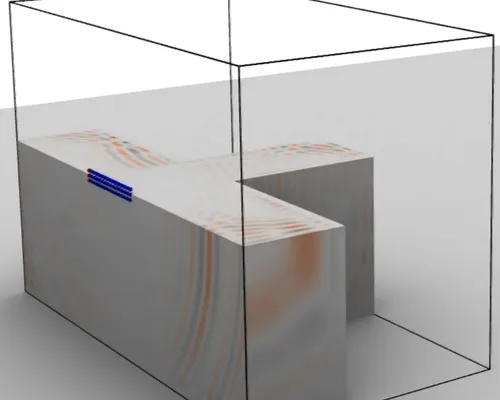
Physics-Informed Digital Twins
Build high-fidelity digital twins from physics-based 3-D wavefield simulations, from complex environments to advanced research workflows.
Read moreStructural Health Monitoring
Continuously assessing infrastructure integrity using sensors and wave-based techniques to detect damage and prevent failures.
Read more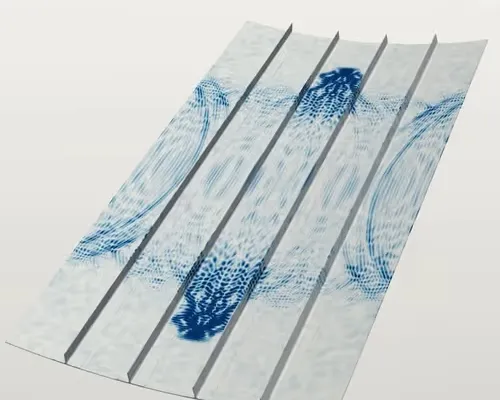
Simulation for Non-Destructive Testing
Simulate inspections in 2-D or 3-D to evaluate new techniques and optimize settings for detection accuracy and reliability.
Read moreCase Studies and Results
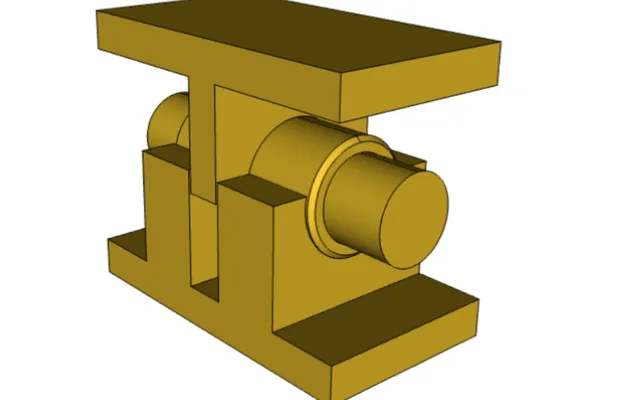
Ultrasonic non-destructive testing simulations of bridge hanger pins under load
The simulations explain how load-dependent transmission into the clevis can create a false indication.
Read more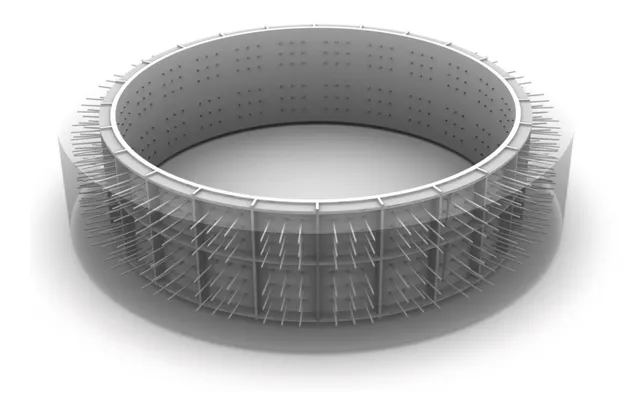
Ultrasonic non-destructive testing simulations of steel-lined concrete penstocks
The simulations show how signals from the concrete and bond condition can be distinguished in this configuration.
Read more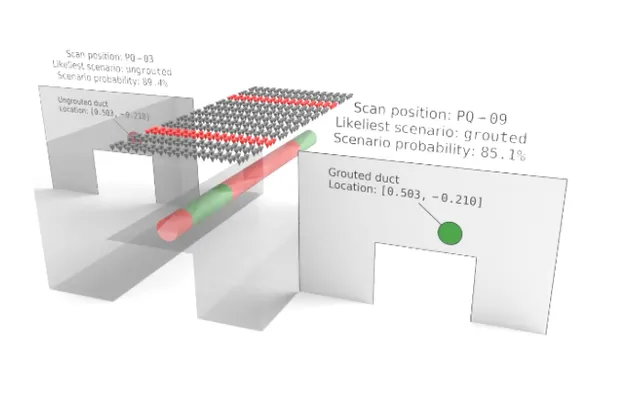
Ultrasonic non-destructive testing PT duct grouting condition
The scenario comparison distinguishes the known grouted and ungrouted conditions at the two analyzed positions.
Read more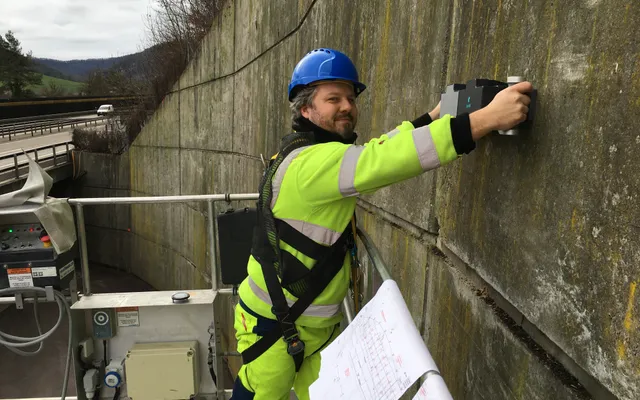
Non-destructive testing of a concrete retaining wall
The images resolve the backwall, counterforts, and anchor features, and reveal two anomalies consistent with reinforcement.
Read more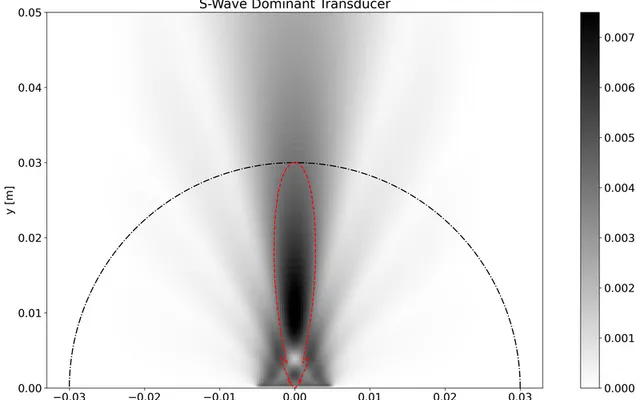
Simulating radiation patterns and phases for ultrasonic transducers
Radiation-pattern visualizations show the differences between P-wave-dominant and S-wave-dominant excitations.
Read moreChoose Your Software
W-Scan
NDT tools for inspectors and engineers that includes both a graphical application and a Python interface.
W-Scan is a UI and workflow add-on to Salvus for non-destructive testing. It adds transducers, inspection instruments, domain-specific meshing, and inspection workflows. Work in its graphical application without code or use its Python interface for automation and customization.
Explore W-ScanSalvus
The engine for performing wave simulations and inversion with full control through Python.
Simulate and invert acoustic and elastic waves in 2-D and 3-D. Salvus includes the solver, meshing, optimization, and workflow management. You control all of it with Python, on a laptop, the cloud, or high performance computing systems.
Explore SalvusLet's Work Together
Discuss Your Project
Tell us what you need to model or understand. We can help you choose software, plan a study, or work with your measurements.