Industry
Earth & Planetary Sciences
Simulate seismic observations and reconstruct Earth and planetary structure from waveforms.
Questions to Investigate
- How do three-dimensional structure and topography influence seismic observations?
- What can seismic or DAS measurements reveal about the subsurface?
- How can a modeling workflow scale from a local experiment to a regional or global study?
Salvus brings mesh generation, wave simulation, data processing, and full-waveform inversion into a Python-based workflow. Model scales range from near-surface experiments to planetary bodies, including curved geometry, oceans, and internal interfaces.
Define a starting material model, sources, and receivers, then compute the expected waveforms or strain measurements. Compare the predictions with observations, investigate sensitivities, or update the structural model through inversion.
Use the case studies to explore ground motion, marine DAS, near-surface imaging, and ambient seismic noise. Tutorials and API documentation provide the next step for building your own workflow.
Technical Capabilities
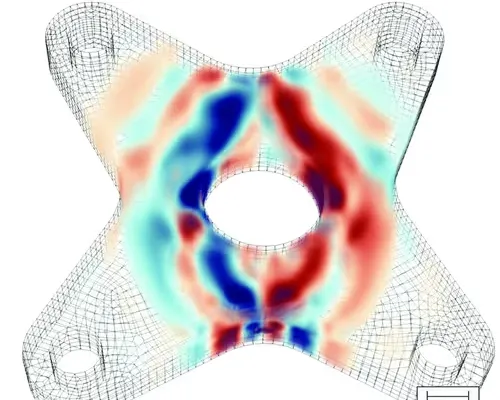
Full-Waveform Imaging and Inversion
Model full wave propagation and reconstruct high-resolution interior structure for material characterization, exploration, and non-destructive testing.
Read moreGeophysical Site Characterization
Full-waveform inversion uses the complete seismic waveform to image the subsurface at high resolution and deliver detailed velocity models.
Read more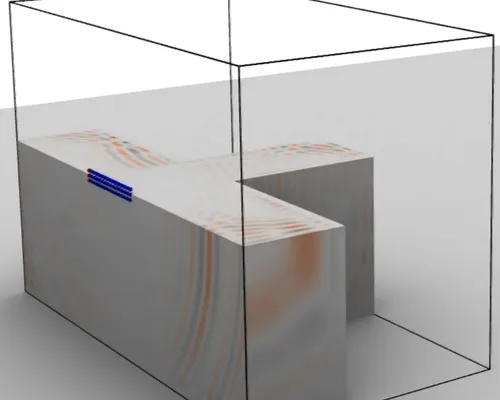
Physics-Informed Digital Twins
Build high-fidelity digital twins from physics-based 3-D wavefield simulations, from complex environments to advanced research workflows.
Read moreDistributed Acoustic Sensing
Distributed acoustic sensing (DAS) turns fiber-optic cables into dense sensor arrays for geophysical imaging, structural monitoring, and NDT.
Read moreCase Studies and Results
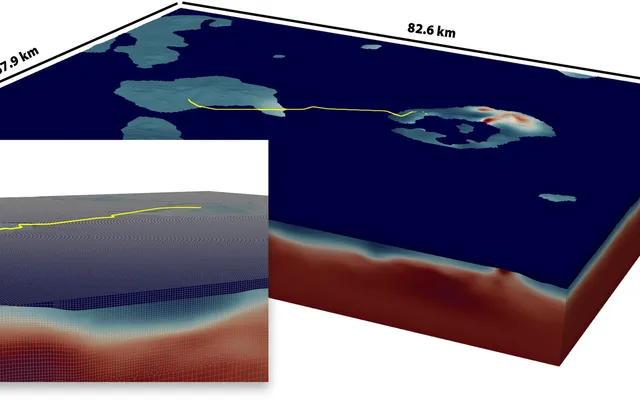
Simulation of Submarine DAS Data: Reproducing Real Data
Simulation helps interpret the observed wavefield and investigate how the environment affects the recorded DAS signals.
Read more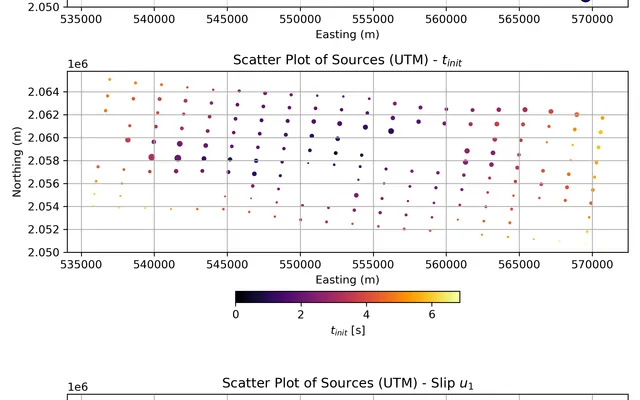
Accurate fault planes in earthquake ground motion modeling
A spatially and temporally varying rupture can be included in a complete ground-motion simulation.
Read more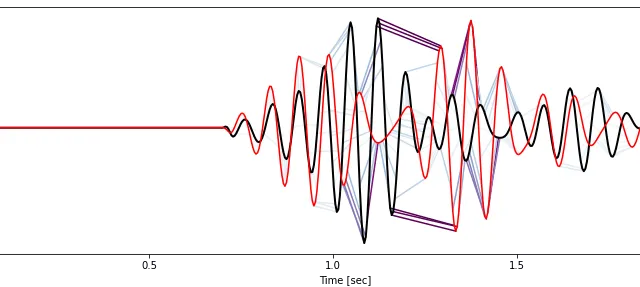
Full-waveform near-surface site characterization
The updated model explains the major observed waveform features and reveals near-surface velocity structure.
Read more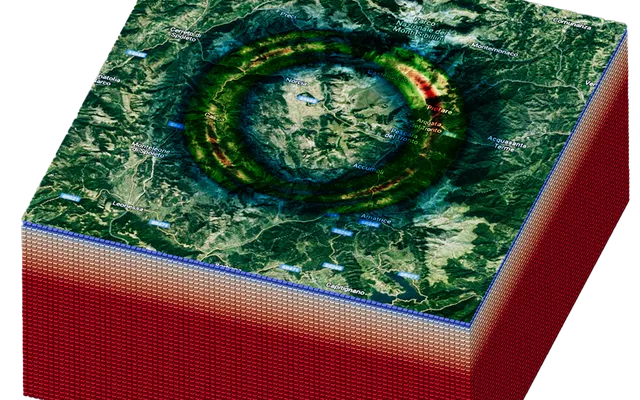
Ground motion modeling dashboard
Researchers can configure and launch three-dimensional simulations through a guided interface with remote compute support.
Read more
Simulating earthquake ground-motion with Salvus
The workflow produces synthetic waveforms, ground-motion maps, and derived shaking intensity measures.
Read more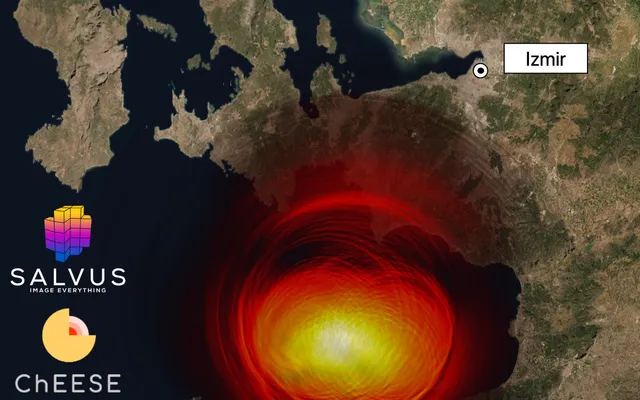
Urgent computing: the largest Salvus simulation yet
The study demonstrates a Salvus simulation with almost 215 million elements and more than 1.5 trillion spatial unknowns.
Read more
Simulating marine data for Distributed Acoustic Sensing (DAS)
The example generates synthetic DAS data in a few minutes on a single NVIDIA GeForce RTX 2060 GPU.
Read more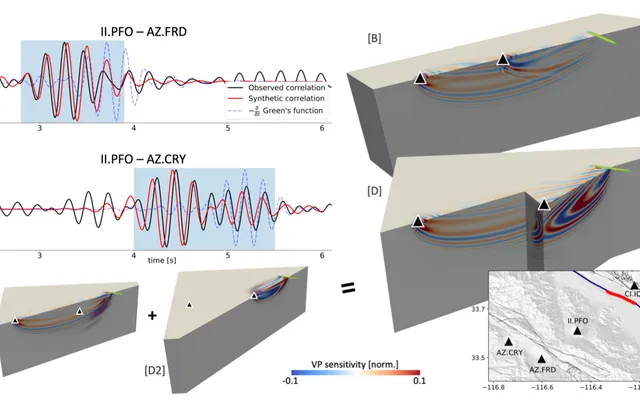
Studying ambient seismic noise with Salvus: modeling, monitoring and inversion
The examples connect noise observations with structural imaging and monitoring applications.
Read moreLet's Work Together
Discuss Your Project
Tell us what you need to model or understand. We can help you choose software, plan a study, or work with your measurements.